Best Running Shoes for Men 2026: 5 Picks for Every Runner
Our guide to the best running shoes for men in 2026, from cushioned daily trainers to stability shoes and faster picks, plus fit advice.
The quick answer: which men's running shoe should you buy?
For most men who run three to five times a week, the Brooks Ghost 17 is the easiest shoe to recommend. It balances cushioning, flexibility and a neutral ride, so it works for parkruns, easy miles and the odd tempo session. If you want maximum softness for long, slow distances, look at the ASICS Gel-Nimbus 27. Runners who need extra support should start with the ASICS Gel-Kayano 32, while the Hoka Clifton 10 suits anyone who wants a lighter, softer daily shoe. The Saucony Endorphin Speed 4 is the pick for intervals and faster training.
| Shoe | Best for | Cushioning | Support | Ride feel |
|---|---|---|---|---|
| Brooks Ghost 17 | Best overall | Balanced | Neutral | Smooth and slightly firm |
| ASICS Gel-Nimbus 27 | Long easy runs | High | Neutral | Plush and protective |
| Hoka Clifton 10 | Soft daily miles | High | Neutral | Light and soft |
| ASICS Gel-Kayano 32 | Extra support | High | Stability | Guided and stable |
| Saucony Endorphin Speed 4 | Faster sessions | Moderate | Neutral | Lively and flexible |
The five best running shoes for men in 2026
These five cover the main jobs a man's running shoe is asked to do: everyday training, long runs, soft recovery miles, support and speedwork. Sizes, colours and stock vary by retailer, so check the fit advice below before ordering.
Best overall
Brooks Ghost 17
The Ghost is Brooks' neutral daily trainer, and the 17th version keeps the formula that made the line a default choice for UK runners. The ride is balanced rather than bottomless: enough cushioning for longer easy runs, but still flexible enough to feel natural when you pick up the pace. The upper is comfortable and secure, and Brooks usually offers the Ghost in more than one width, which helps if you have broad feet.
Why it works
- Comfortable from the first run with no break-in fuss
- Balanced cushioning suits daily training and parkruns
- Neutral ride works for a wide range of runners
- Often available in multiple widths
Watch out for
- Less plush than max-cushion shoes for very long runs
- Not the lightest option for fast intervals
- Firmer underfoot than some soft-foam rivals
Best for long runs
ASICS Gel-Nimbus 27
ASICS's Gel-Nimbus line is built for runners who want to protect their legs on long, easy days. The Nimbus 27 uses a high stack of soft foam and a comfortable upper, so it feels plush without wallowing. It is a neutral shoe, not a stability shoe, so it suits runners whose gait does not need extra support. It is also a good choice for recovery runs when your legs are tired.
Why it works
- Plush cushioning for long runs
- Comfortable upper with a secure heel
- Neutral ride that still feels stable
- Good for recovery days
Watch out for
- Heavier than lighter daily trainers
- Less responsive for tempo work
- Bulkier profile than a standard daily shoe
Best for soft landings
Hoka Clifton 10
The Clifton is Hoka's soft, lightweight daily trainer. The 10th version keeps the generous cushioning and rocker geometry that make the shoe feel easy to roll through, while the upper is breathable and comfortable for warm-weather running. It is a neutral shoe, so it is best for runners who do not need pronation support. It works well as a soft daily shoe or a second pair for recovery runs.
Why it works
- Soft landings without a heavy feel
- Smooth rocker helps easy miles pass
- Breathable upper for warmer runs
- Good second pair for recovery days
Watch out for
- Less stable for runners who want a firm platform
- Not a speed shoe
- Soft foam can feel vague on uneven ground
Best for extra support
ASICS Gel-Kayano 32
The Gel-Kayano is ASICS's long-running support shoe. The Kayano 32 is designed for runners who want a stable platform and some guidance through the gait cycle, but it does not feel as harsh as old-school stability shoes. The cushioning is generous enough for daily training, and the upper holds the foot securely. If a gait analysis has pointed you towards support shoes, this is a strong place to start.
Why it works
- Supportive without feeling rigid
- Comfortable for daily miles
- Secure upper and stable heel
- Good for runners who overpronate
Watch out for
- Heavier than neutral daily trainers
- More shoe than neutral runners need
- Less lively for fast sessions
Best for faster sessions
Saucony Endorphin Speed 4
The Endorphin Speed is Saucony's faster training shoe. The 4th version uses a nylon plate and a lively foam, which gives it a quick, rolling feel for intervals, tempo runs and race-pace practice. It is still comfortable enough for some runners to use on easy days, but it is at its best when you want to push. It is a neutral shoe and not a replacement for a daily trainer if you need maximum cushioning.
Why it works
- Lively for tempo and intervals
- Lighter than most daily trainers
- Smooth rolling ride
- Useful for race-pace practice
Watch out for
- Less cushioned for easy recovery runs
- Plate feel is not for everyone
- Better as part of a rotation than a single pair
How to choose running shoes for men
Start with your gait, not the colourway. Most men do fine in a neutral daily trainer. If a physio or running shop has told you that you overpronate, or you feel your arch collapsing and your knees rolling inwards, try a support shoe such as the Gel-Kayano. If you are unsure, a gait analysis at a specialist running shop is worth the time.
- Cushioning: More foam suits long runs and heavier runners; less foam feels faster and more grounded.
- Drop: The heel-to-toe difference changes how the shoe loads your calves and Achilles. If you are used to traditional shoes, move to a lower drop gradually.
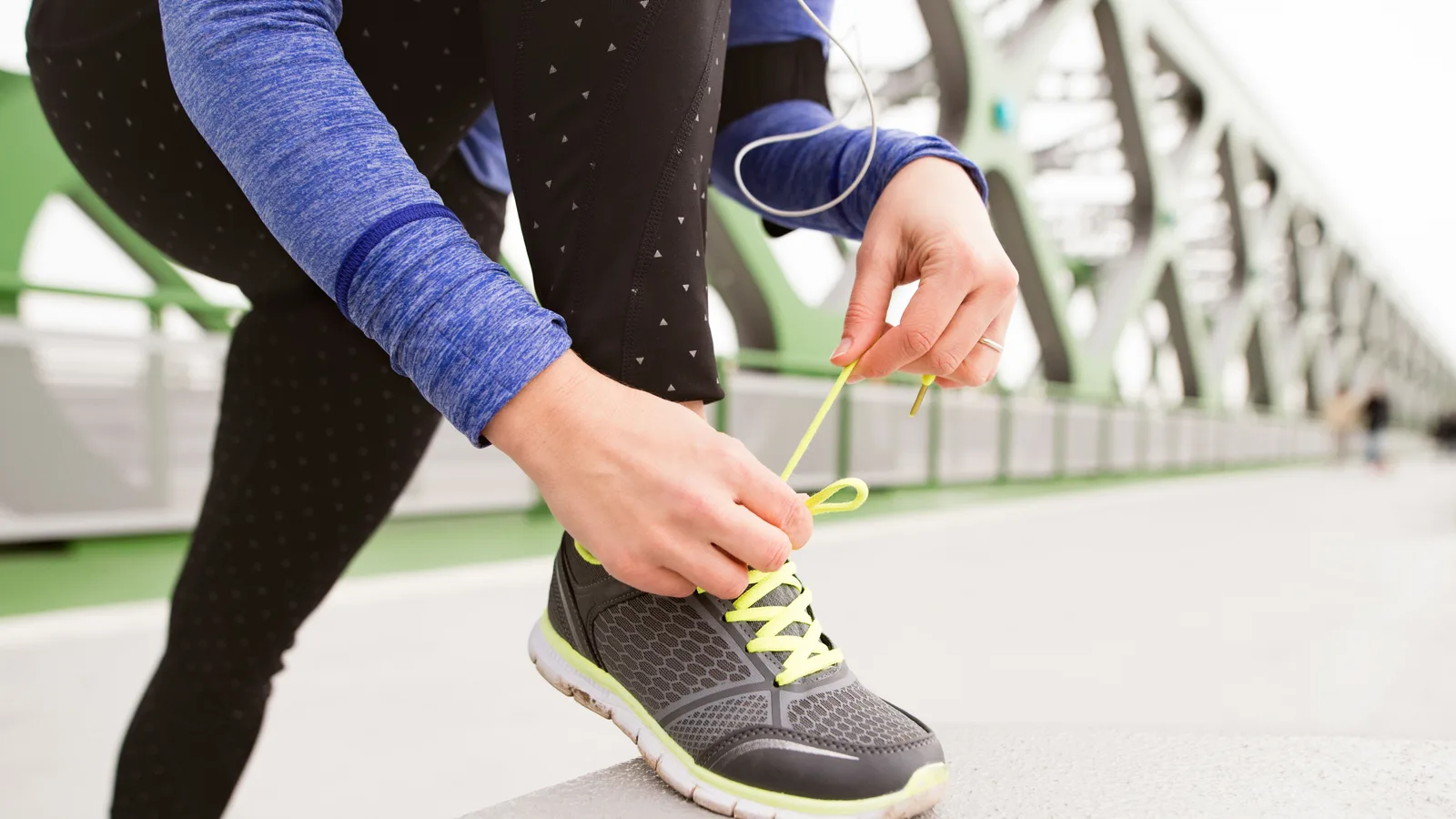
- Fit: You want a thumb's width between your longest toe and the end of the shoe, a secure heel and no pressure across the top of the foot.
- Rotation: Two pairs used alternately can be more practical than one expensive pair for everything.
- Fit and width
- 5.0 / 5
- A shoe that pinches will never work, however good the foam.
- Cushioning match
- 5.0 / 5
- Choose more for long easy miles, less for speedwork.
- Stability needs
- 4.0 / 5
- Only go supportive if you genuinely need guidance.
- Ride feel
- 4.0 / 5
- Soft, firm, rockered or flexible — personal preference matters.
- Outsole grip
- 3.0 / 5
- Important on wet UK pavements and mixed paths.
Fit and sizing advice for UK runners
UK sizing varies between brands, so start with the size you normally take in trainers and be prepared to go up half a size if your toes brush the front. Try shoes on late in the day when your feet are slightly swollen, and wear the socks you run in. A good running shop should let you jog on a treadmill or outside; if you are buying online, check the returns policy before you run outdoors.
Our verdict
Frequently asked questions
How often should I replace men's running shoes?
Replace them when the midsole feels flat, the outsole is worn through or you start noticing niggles that were not there before. Rotating two pairs can make each last longer and gives the foam time to recover between runs.
Do I need stability running shoes?
Not unless you have been assessed as needing extra support or you clearly overpronate and feel it in your knees or arches. Many men run comfortably in neutral shoes. A gait analysis is more useful than guessing from an online quiz.
Should running shoes be a size bigger?
Not automatically. You need enough room at the front — roughly a thumb's width — and a secure heel. Some runners go half a size up, especially for long runs when feet swell, but a shoe that is too long can cause rubbing.
Can I use running shoes for the gym?
For treadmill running, cycling and light cardio, yes. For lateral work, lifting and court sports, a cross-trainer or gym shoe with a flatter, more stable base is usually better.
What does drop mean in running shoes?
Drop is the difference in height between the heel and the forefoot. A lower drop can load the calf and Achilles more, so if you are used to traditional shoes, introduce a lower-drop pair gradually rather than switching all at once.