How to break in Dr Martens boots: a gentle routine
Stiff soles and heel blisters are normal at first. Here's how to soften new Dr Martens safely, step by step, without wrecking the leather.
The short answer
New Dr Martens feel like planks because the leather is thick, the sole is rigid, and the upper is stitched to the sole rather than glued — so nothing gives until the leather has flexed and moulded to your feet. There is no safe overnight fix.
The method that works is dull but reliable: condition the leather, wear the boots in short bursts in thick socks, and let them rest and dry between wears. Expect a few weeks of regular wear, not a couple of days.
What you need before you start
Nothing here is specialist kit, and you probably own half of it already:
- Thick socks
- Wool or thick cotton walking socks — or two thin pairs layered
- Leather conditioner
- A wax or oil-based balm for smooth leather; a small tin goes a long way
- Soft cloth or sponge
- For working in conditioner and buffing off the excess
- Shoe horn
- Protects the stiff heel counter when you push your foot in
- Shoe tree or newspaper
- Holds the shape and pulls moisture out between wears
- Blister plasters
- Hydrocolloid plasters for hot spots — keep a couple in your bag
Give yourself a clear couple of weeks when you can wear the boots for short periods — a commute, a trip to the shops — rather than one long day when you have no choice.
How to break in Dr Martens, step by step
-
Check the fit before you start
The boot should hold your heel with a thumb's width between your longest toe and the front. If your toes touch the end, or the widest part of your foot is being pinched, wearing them in won't fix it — that's a sizing problem. Try them on indoors on carpet, before the soles get scuffed.
-
Condition the leather first
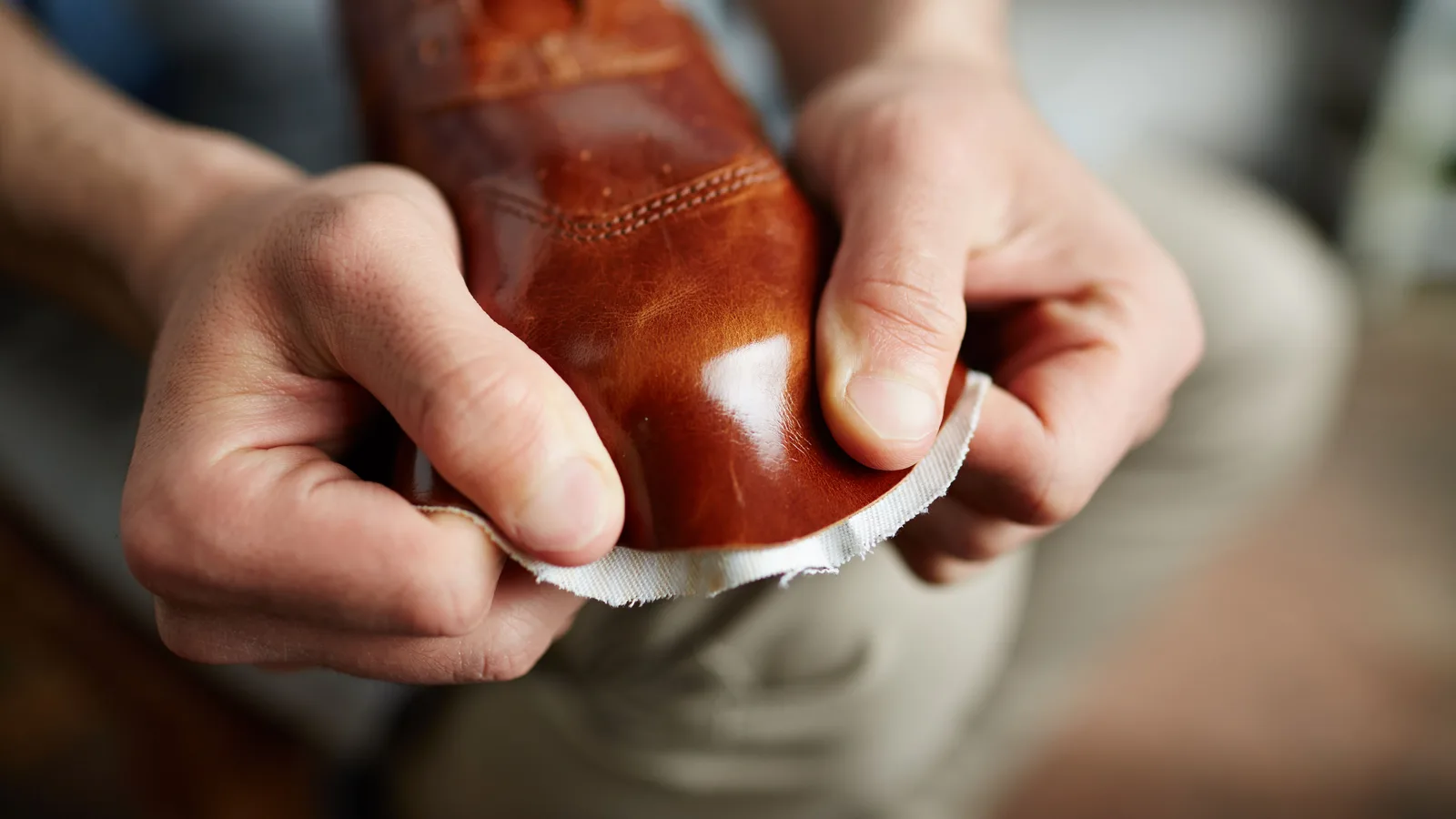
Work a small amount of wax-based balm into the stiff areas: the heel counter, the tongue and the flex point across the toes. Leave it to soak in for an hour or so, then buff off anything still sitting on the surface. Conditioned leather flexes; dry leather cracks.
-
Lace them properly
Loosen the laces all the way down before you put the boots on, then lace from the bottom up. If the top is pressing into your shin, leave the top eyelet empty or lace it loosely. Firm lacing across the middle of the foot keeps your heel seated, which is what stops the back of the boot sawing at your ankle.
-
Start with short wears in thick socks
Wear them for 20–30 minutes at home, then build up: a short walk, then a commute, then half a day. Thick socks add padding and take up a little volume. If the boots feel tight, choose one thick pair over two — over-packing the boot makes pressure points worse.
-
Flex the boots by hand
While you're not wearing them, bend each boot at the ball of the foot, roll the heel counter between your hands and work the tongue back and forth. It looks ridiculous and it works. A few minutes while you're watching television does more for a stiff sole than an hour of limping.
-
Deal with hot spots the moment you feel them
A hot spot is a blister forming. Stop, take the boot off and cover the area with a hydrocolloid plaster before you carry on. Ignoring it earns you a blister that takes a fortnight to heal and puts you off wearing the boots altogether.
-
Rest and dry them between wears
Stuff the boots with newspaper or a cedar shoe tree and leave them at room temperature for a day. Leather that stays damp from sweat never softens properly, and wearing the same pair every day means they never fully dry out.
How long does breaking in take?
It depends on the leather rather than on how tough you are. Smooth and hard-grain leather takes longest — usually a few weeks of regular wear before the flex point stops fighting back. Softer oiled leathers give within days. Patent finishes are coated, so they crease rather than stretch, and synthetic uppers don't mould the way leather does: with those, the fit has to be right from day one.
| Upper | How it feels new | What to expect |
|---|---|---|
| Smooth leather | Firm, almost cardboard-stiff across the flex point | Softens steadily over a few weeks of regular wear |
| Greasy or oiled leather | Supple but heavy, with a waxy feel | Gives within days; condition sparingly so it doesn't go floppy |
| Tumbled or soft leather | Already pliable out of the box | Barely any breaking in; watch for the ankle collapsing |
| Patent | Glossy, rigid and unforgiving across the instep | Creases rather than stretches — buy the right size and expect firmness to stay |
| Synthetic or vegan upper | Light and stiff, with no give in the grain | Won't mould like leather; fit and socks do the work |
Never soak, bake or heat your boots
What commonly goes wrong — and the fix
| Symptom | Why it's happening | What to do |
|---|---|---|
| Heel rubbing and blisters | The heel counter is still rigid and your heel lifts with every step | Lace firmer across the midfoot, wear thick socks, cover the spot with a blister plaster and keep sessions short |
| Toes going numb | Laces too tight across the instep, or the boot is too short | Re-lace with less tension over the top of the foot; if your toes touch the end, you need a different size |
| Aching across the top of the foot | The vamp is creasing into a hard ridge before it has softened | Condition the area, flex the boot by hand and lace more loosely over the instep for a week |
| One boot rubs, the other doesn't | Feet are rarely identical, and no two boots crease the same way | Treat the problem boot separately: extra conditioner, a plaster on that foot, shorter wears |
| Boots feel damp and clammy | Worn every day with no time to dry out | Give them 24 hours between wears, stuff with newspaper and change socks mid-day |
Blisters and hot spots: handling the damage
- Don't ignore a hot spot. That burning feeling means friction has already started damaging the skin; another ten minutes turns it into a blister.
- Use hydrocolloid plasters, not fabric ones. They cushion and stay put; ordinary plasters slide off inside a boot within minutes.
- Try a liner sock. A thin synthetic liner under a thick wool sock lets the two layers rub against each other instead of against your skin.
- Don't pop blisters. If one bursts on its own, keep it clean, cover it and give the boots a rest day.
- Take extra care if you have diabetes or poor circulation. Foot injuries need medical advice, not a plaster and a stiff upper lip.
Caring for the leather while you break it in
Condition every couple of weeks while the boots are new, then every few months once they've softened. Use less than you think: a thin layer worked in and buffed off is plenty. Over-conditioning makes leather floppy, darkens the colour and clogs the stitching.
Wipe off grit and road salt with a damp cloth, let the boots dry naturally and keep them out of hot cupboards and airing-cupboard draughts. Polish protects the surface but won't soften anything — it's the balm underneath doing the work.
If they still won't give
If one specific spot — usually the heel counter or the seam across your little toe — is still biting after a few weeks, a cobbler can stretch it on a proper boot stretcher. That's a targeted fix for a single pressure point, not a cure for a boot that's too small.
If the problem is length, width across the toes, or a heel that lifts however you lace, it's a fit issue and no amount of conditioner will solve it. Check the retailer's returns policy before you wear them outdoors: scuffed soles usually rule out an exchange.
Dr Martens break-in FAQs
Can I speed up breaking in Dr Martens?
Only by being consistent. Conditioning the leather, flexing the boots by hand and wearing them in several short sessions a day will get you there faster than one heroic long wear. Anything involving heat, water or force risks damaging the leather or the shape of the boot.
Should I size up to make them easier to wear in?
No. A larger boot doesn't soften any quicker — it just slips at the heel, which causes exactly the blisters you were trying to avoid. Pick the size where your heel stays put and your toes have a little room at the front.
Will Dr Martens stretch in length?
No. Leather gives across the width and moulds around the shape of your foot, but it won't get longer. If your toes press against the front of the boot, the size is wrong.
Is it normal for one boot to hurt more than the other?
Yes. Feet differ slightly in size and shape, and boots are cut and stitched individually. Give the tighter boot extra conditioner and shorter wears rather than forcing both to the same schedule.
Can I use a hairdryer to soften the leather?
No. Direct heat dries out the oils that keep leather supple, leaving it stiff and prone to cracking, and it can distort the shape of the upper. Flex the boot by hand instead.