How to remove makeup properly: a simple evening routine
A clear, step-by-step guide to taking off makeup without tugging or stinging, from eye makeup and waterproof mascara to the second cleanse.
The short answer: cleanse twice, gently, and never tug
Removing makeup properly is less about which bottle you buy and more about the order and the pressure. Done well it takes about two minutes and leaves skin clean, calm and free of that tight, scrubbed feeling.
The reliable method is a two-step cleanse. First, an oil-based balm, cleansing oil or bi-phase eye remover lifts the makeup itself — pigment, silicones, waterproof waxes and long-wear formulas. Then a water-based cleanser takes away whatever the oil left behind, along with sunscreen, sweat and the day's grime.
Eyes and lips come off first, with their own remover, because dragging at mascara after you have already massaged cleanser across your face is exactly how lashes get pulled out and lids get sore.
Three rules cover most of it: lukewarm water, fingertips instead of a rough cloth, and stop when the cotton pad comes away clean.
What you need before you start
You can do this with four things and no gadgets:
- Clean hands. Makeup removal is hands-on, so wash and dry them first.
- An oil-based remover — a cleansing balm, cleansing oil or a bi-phase eye makeup remover. This does the heavy lifting.
- Cotton pads or a soft microfibre cloth. Pads are better for eyes because you can use a fresh one each time.
- A gentle water-based cleanser — a cream, gel or milk formula rather than a foaming, squeaky-clean one.
- Lukewarm tap water and a clean towel. Hot water strips skin and stings eyes; a towel you have been using for a week undoes the good work.
Optional but useful: a separate eye makeup remover if your face balm makes your vision blurry, and a small mirror so you can see the jaw and hairline where foundation collects.
How to remove makeup properly, step by step
-
Wash your hands
Wet hands make a balm slippery and hard to control, and dirty hands carry the day's bacteria straight into your eyes. Soap, rinse, dry properly.
-
Soak a pad and take off your eye makeup
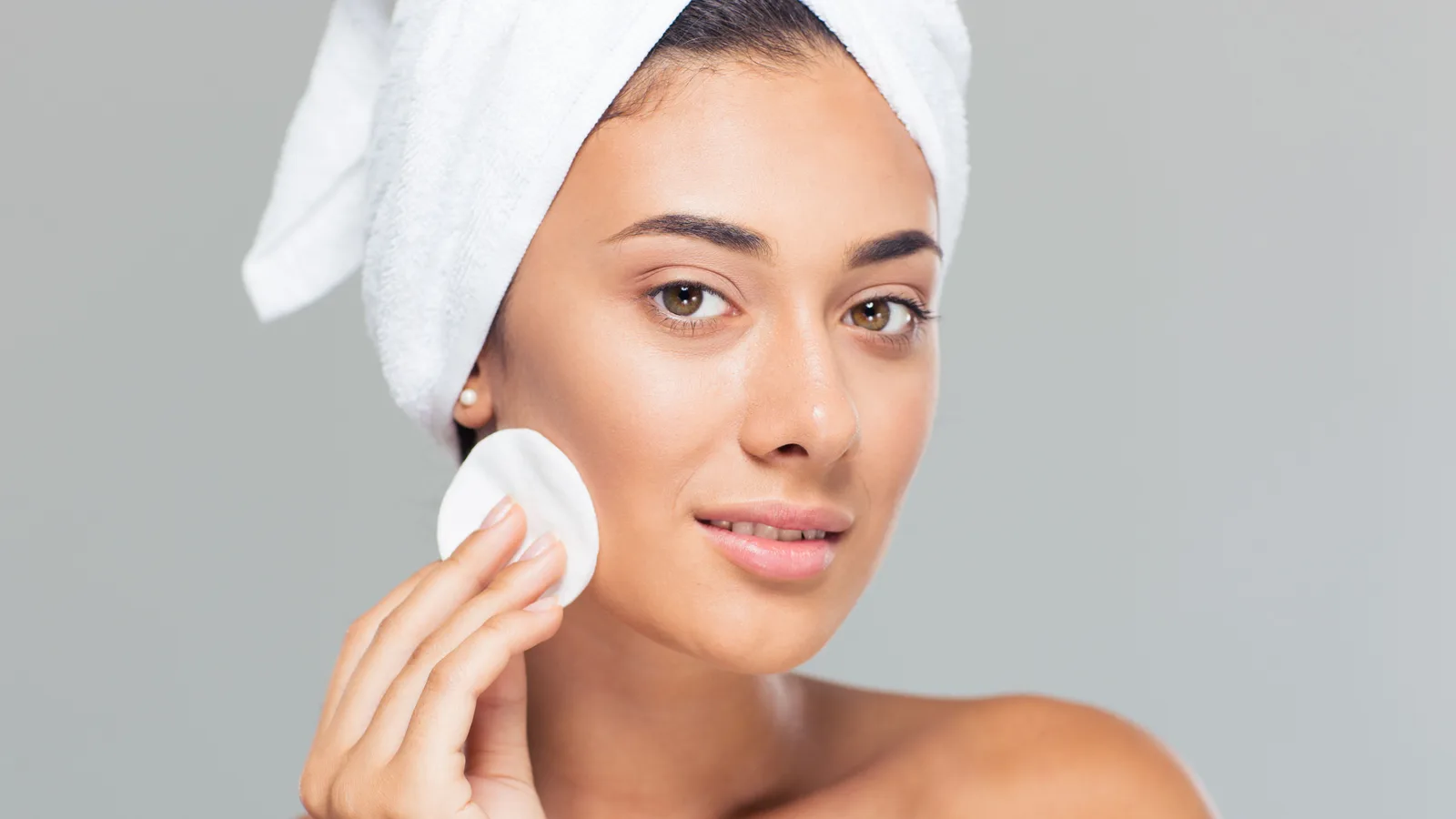
Saturate a cotton pad with eye remover or micellar water — damp, not dripping. Close one eye and hold the pad against it for 10–20 seconds so the formula can soften the mascara. Wipe downwards and outwards in one slow pass, then fold the pad and sweep gently under the lower lash line. Use a fresh pad for the other eye.
-
Take off your lipstick the same way
Press a pad against your lips for a few seconds, then wipe from the corner inwards so you don't drag colour past the lip line. Long-wear liquid lipsticks usually need an oil-based remover; micellar water alone tends to smear them.
-
Massage an oil cleanser over dry skin
With dry hands and a dry face, massage a cleansing oil or balm over the whole face for 30–60 seconds. Concentrate on the nose, hairline and jaw, where foundation and sunscreen collect. Don't add water yet — the oil needs to meet the makeup before it meets water.
-
Emulsify, then rinse
Add a splash of lukewarm water and keep massaging. The oil turns milky, which is what allows it to rinse away instead of sitting on the skin in a film. Rinse thoroughly.
-
Cleanse again with a water-based cleanser
A gentle gel or cream cleanser lifts the last of the oil along with sweat, sunscreen and city grime. Around 30 seconds of gentle circling is plenty. Rinse with lukewarm water.
-
Check, then moisturise
Sweep a fresh pad with micellar water over your whole face. If it comes away with colour, repeat the oil cleanse once. Pat dry with a clean towel and apply moisturiser within a couple of minutes, while skin is still slightly damp.
Eyes: the part most people rush
The eye area is where bad technique shows up first — stinging, redness, and eventually thinner lashes. A few habits make the difference:
- Never rub. Wipe in one direction, downwards, and let the pad do the work.
- Don't reuse pads. Flipping a used pad over just moves dissolved mascara and eyeliner back onto the skin.
- Keep remover out of the lash line. A pad that is too wet pushes product into the eye; wring it slightly first.
- Take out contact lenses before you start, not after.
- If something stings, stop and rinse with lukewarm water for a minute rather than blinking through it.
Waterproof and long-wear formulas need oil, not water
Waterproof mascara, transfer-proof foundation and long-wear lipstick are built to resist water — that is the whole point. Water-based cleansers and plain micellar water struggle with them because like dissolves like: the waxy, silicone-heavy ingredients need an oil to break them down.
That is why the first cleanse matters most on a full-glam day. If you are wearing very little — a tinted moisturiser and a bit of brow pencil — you can often get away with one gentle cleanse plus a micellar pass, and save the balm for heavier days.
Which remover suits which job
| Remover type | Best for | Watch out for |
|---|---|---|
| Cleansing oil or balm | Long-wear foundation, waterproof mascara, sunscreen; suits most skin types | Leaves a film if you do not emulsify with water before rinsing |
| Micellar water | A quick first pass, reactive skin, travel and gym bags | Needs soaking time on waterproof formulas; rinse or follow with a cleanser |
| Cream or milk cleanser | Dry or mature skin, light makeup days, winter | Struggles with transfer-proof and waterproof formulas |
| Bi-phase eye remover | Waterproof mascara, eyeliner and stubborn lip stain | Shake before use; the oily layer can blur vision briefly |
| Facial wipes | Emergencies only — a late night away from a sink | Dragging and friction; rarely lift waterproof makeup fully |
What commonly goes wrong, and how to fix it
| What went wrong | Why it happens | The fix |
|---|---|---|
| Stinging, watery eyes | Remover worked into the lash line, or a pad that is dripping wet | Use a damp pad, close the eye and wipe downwards, then rinse with water |
| Skin feels tight afterwards | Water that is too hot, or a foaming cleanser that strips | Turn the temperature down and switch to a cream or gel cleanser |
| Colour still on the pad next morning | First cleanse too short, or the oil was never emulsified | Massage for 30–60 seconds, add water to emulsify, rinse and repeat once |
| Red, blotchy cheeks | Scrubbing with a flannel or cloth | Use fingertips; keep any cloth for a final rinse only, and pat dry |
| Thinning, broken lashes | Pulling at mascara that has not softened | Hold the pad on for 10–20 seconds first, then wipe down; never pick at lashes |
Easy to get wrong, and worth avoiding
- Hot water and hot flannels. They feel lovely and leave skin flushed and drier than before. Lukewarm is enough.
- Substituting a body scrub or exfoliating mitt. Physical exfoliation on top of makeup removal is double the friction on already-compromised skin.
- Sharing eye products. Mascara, liner and eye creams should not be passed around, and eye makeup that has changed smell or texture should go.
- Using neat household oils near the eyes. They can work on stubborn mascara, but they are hard to rinse, leave a film and blur vision.
- Relying on wipes every night. As an occasional rescue they are fine; as a routine they mean dragging a dry sheet across your face daily.
The two minutes after: aftercare that finishes the job
Cleansing is only half of it. Moisturiser applied while skin is still slightly damp helps lock in water, and a separate eye cream — if you use one — goes on with the ring finger and no dragging. If you use a toner, choose one without a strong alcohol smell, because astringent toners on freshly cleansed skin are where that tight, stinging feeling comes from.
Two small housekeeping habits make a difference: change your pillowcase regularly (it collects makeup, oils and haircare residue), and keep your remover bottles closed and out of direct sunlight so they stay hygienic.
The 60-second version for late nights
You can shrink the routine without skipping it:
- Soak one pad and hold it over each eye for 20 seconds, then wipe down.
- Massage a cleansing balm over dry skin for 30 seconds, add water, rinse.
- Pat dry and put on moisturiser. Done.
What you should not do is scrub harder to save time. Extra pressure does not remove waterproof makeup faster; it just leaves you red-faced and sore-eyed in the morning.
Common questions about removing makeup
Do I have to rinse micellar water off?
It is best to. Micellar water contains mild surfactants that lift makeup, and leaving them on the skin can feel drying or irritating over time. Either rinse with lukewarm water or follow with a regular cleanser.
Can I use the same cleanser on my eyes and my face?
Often yes, if it is a gentle cream or balm and does not sting. Many people still keep a separate eye remover because face products can blur vision and are harder to control on the lash line.
How do I remove makeup without a sink?
Use micellar water and cotton pads for the whole face, working in sections and using a fresh pad for each area, then finish with a no-rinse cleanser or a swipe of moisturiser. It is not as thorough as a rinse, so do the full routine once you are home.
Is double cleansing necessary every night?
Not always. It earns its place on days with sunscreen, long-wear makeup or city grime. On bare-skin or light-makeup days, one gentle cleanse is usually enough.
Should I remove makeup before or after showering?
Before. Steam loosens things slightly, but makeup that runs into your eyes in the shower is hard to deal with, and you want the cleanser rinsed off properly at the sink.